[vc_row][vc_column][vc_column_text]”Work-life balance,” a term everyone has probably heard by now. A quick Google search shows that the term came into use in the 1970s and 1980s, when stressed-out baby boomers were trying to balance career, family and other aspects of their lives. Since then, it has become a buzzword that is in the mouth of every self-respecting company that wants to keep their employees from overwork and the dreaded burnout. But what exactly does “work-life balance” mean?
“Work-life balance” (noun) [alg.] work-life balance, work-life balance, work-life balance – Just find your work-life balance in these days of “do your work with abandon!” and “enjoy!”*
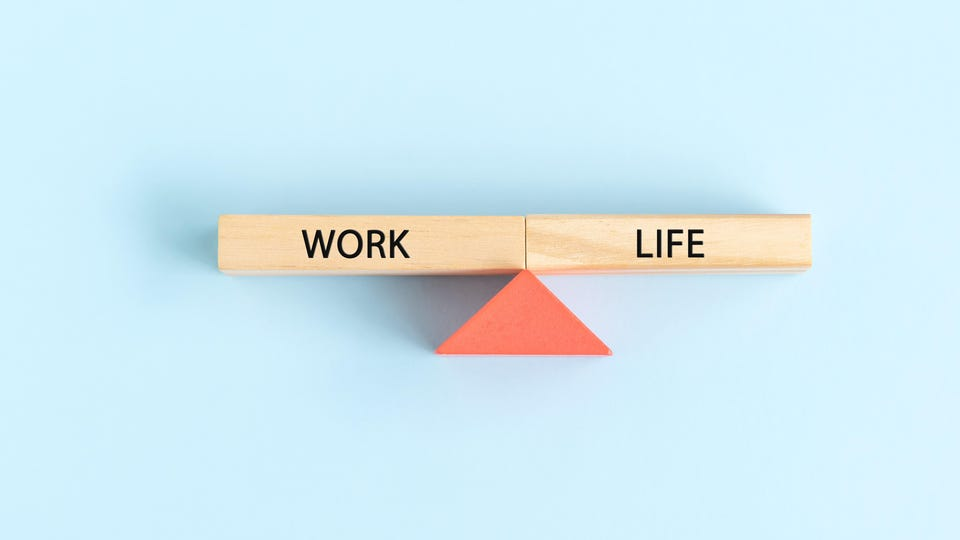
Let’s explore this a little further. The definition states that this is a balance, with work on one scale and personal on another. 
From this one can deduce that if the work element increases in mass, the life element will also have to increase in mass to maintain this balance. Conversely, if the ‘life’ element increases in mass, the ‘work’ element will also have to increase in mass to maintain the balance between the two.
Now I can only speak from personal experience, but I suspect that most of you – like me – often have little time/energy left in a busy period at work to invest in the ‘life’ aspect. Probably needless to say that this is the same the other way around.
If we follow this reasoning, we see that in practice, an increase of mass in the “work” element automatically causes the mass in the “life” element to decrease, which actually upsets the balance between the two more! Again, from personal experience, I see the same thing happening the other way around: if I am expected at a three-day wedding in Barcalona, my work output will not improve….
In summary, I see that the term “work-life balance” sounds nice in theory, but falls short in practice. Therefore, I suggest we look at an alternative balance: the “energy balance.
There are aspects of life (if all goes well) that energize you. Think of your hobbies, sports, chatting with family and friends, hiking in nature and, indeed, there may well be aspects of your work that energize you.
At the same time, there are also parts of your life that cost you energy. I could probably even put the same list here as in the paragraph above. I argue that THIS is the balance to keep in mind.
Think of your energy household as credit on a credit card. There are obligations in life for which we must surrender a piece of our credit. If we give in too much credit, we run the risk of not being able to pay off our debt (read energy). This creates stress, a state of pressure or strain that arises when the adaptability in a given life situation is exceeded.**
Enough (mental) resources must remain to consistently pay off the energy debt we collect. We do this repayment by engaging in activities that energize us. If you find that you have given too much of yourself with work, friends, sports or other obligations, GRANT yourself to engage in an activity that replenishes the energy balance. Is that a weekend of reading a book on the couch? Go for it! Is that a night out at the pub? Go for it and enjoy. But keep in mind that even in these activities, there will be components that give energy and take energy. Be aware of this and train yourself to recognize these components. Curiosity is key. Who knows, more things may float to the surface about yourself that you didn’t know before!
Finally, I want to emphasize that this is an opinion piece and not a scientific article. Do you have other ideas about this? If so, please put them in the comments and let’s explore this further together. 🙂
* https://www.ensie.nl/betekenis/work-life-balance
**https://www.ensie.nl/redactie-ensie/stress[/vc_column_text][/vc_column][/vc_row]